

How Does Sceye's Stratospheric Airships Keep Track Of Greenhouse Gases
1. The Monitoring Gap Is Much Bigger That Most People Are Acquainted With
GHG emissions from global warming are tracked through a series of ground stations as well as occasional flights by aircraft, and satellites that are operating hundreds of kilometres in the air above the surface. Each has its limits. Ground stations are scattered and geographically biased toward wealthy nations. Aircraft operations are costly shorter-duration, as well as narrow in coverage. Satellites can reach the world, but struggle with the spatial accuracy required to pinpoint the exact source of emissions — leaky pipelines, a landfill venting methane or an industrial facility which isn't reporting its output. The result is an monitoring system that has serious problems at the exact extent where accountability and control matters most. Stratospheric platforms are now being thought of as the bare middle layer.
2. It's an advantage to be at altitude. Satellites Don't Have the Ability to Replicate
There's a geometries argument to explain what 20 kilometers is more effective than 500 kilometers in emissions monitoring. A sensor operating from stratospheric altitude is able to see a ground footprint of several hundred kilometers and still be close enough to discern emission sources with a significant resolution. This includes individual facilities roads, roads, agricultural zones. Satellites that are looking at the same region from the low earth orbit can cover it better however with a smaller granularity and revisit times. A methane vapor that appears and disperses over a period of time may not be captured. The presence of a platform over an area of interest for a period of days or weeks at a given time can transform intermittent snapshots into something closer to continuous surveillance.
3. Methane is the most important target and for good reason
Carbon dioxide catches the majority people's attention, but methane is the greenhouse gas that future monitoring improvements could make the most impact. Methane is much more potent than CO2 over the 20-year duration in addition to a significant percentage of the methane emissions that are anthropogenic come from a few sources — oil and gas infrastructure landfills, waste facilities, agriculture, and other activities that are both detectable as well as fixable once identified. Real-time methane monitoring from a constant stratospheric platform implies authorities, regulators and governments can discover leaks as they occur instead of finding them years later when they conduct annual inventory reconciliations that usually rely on estimates, rather than actual measurements.
4. The design of Sceye's airship is perfectly Suited to the Monitoring Mission
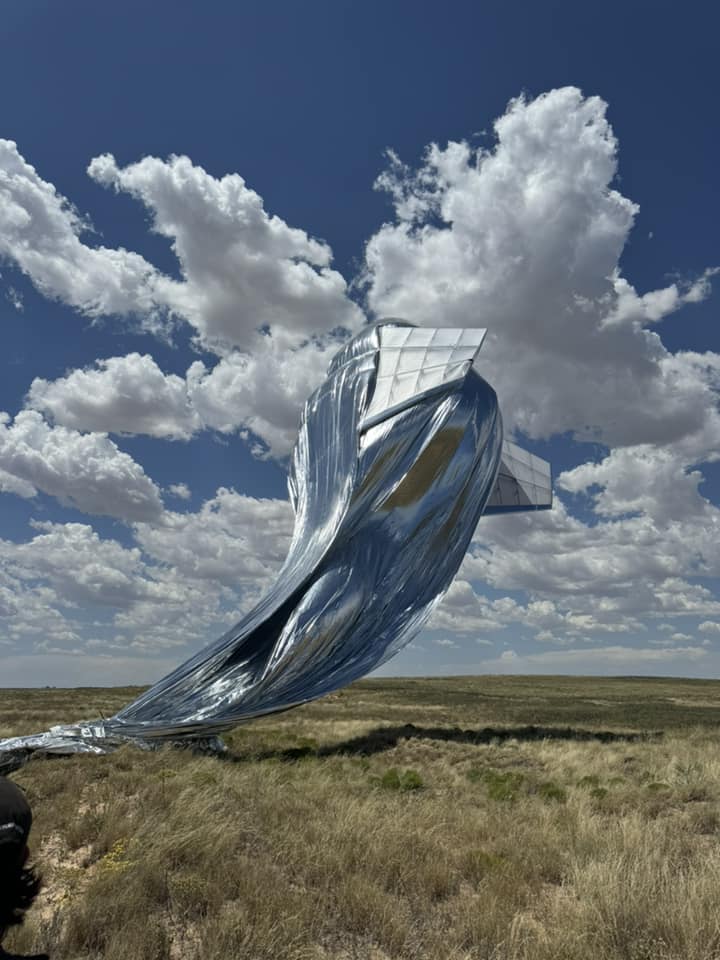
What makes an excellent telecommunications platform as well as a top environmental monitoring platform have more in common than you believe. Both require long endurance as well as stable positioning and an adequate payload capacity. Sceye's lighter than air airship model tackles all three. Because buoyancy helps with the fundamental mission of keeping the aircraft aloft the energy budget of the airship isn't consumed by generating lift the budget is available to power propulsion, station maintenance and powering the sensor can be utilized to meet the requirements of the mission. Particularly for monitoring greenhouse gas emissions, this means carrying imaging systems, spectrometers, as well as data processing hardware that doesn't have the burdensome weight limitations for fixed-wing HAPS models.
5. Station Keeping Must Be Non-Negotiable in order to collect valuable environmental information
Monitoring platforms that drift can produce results that are hard to interpret. Being able to pinpoint exactly where a sensor was at the time it recorded a reading is fundamental to attributing that reading to the source. Sceye's focus on real station-keeping — ensuring a fixed position above a specified area via active propulsion it's not just an arbitrary performance measure. It's why the data is credible and scientifically reliable. Stratospheric earth observations only become truly useful for regulatory or legal requirements when the positional record is trustworthy enough to stand up to scrutiny. Drifting balloon platforms despite how powerful their sensors are, don't offer this.
6. A Single Platform is able to Monitor Oil Pollution and Wildfire Risk During the Same Time
One of the most intriguing features of the multi-payload model is how seamlessly different environmental monitoring missions complement each other on the exact same platform. A vessel operating over the ocean or in coastal areas can be equipped with sensors that are calibrated for the detection of oil pollution in addition to monitoring methane and CO2. On land, the same platform architecture allows for wildfire detection technology that detects smoke plumes, heat signatures as well as vegetation stress indicators which are the precursors to ignition events. Sceye's methodology for designing mission makes these not distinct projects that require separate aircrafts, but as parallel applications to infrastructure that's already set and operating.
7. The ability to detect Climate Disasters through Real-Time Changes the Response Equation
There's a big difference between knowing that a fire started within six hours and having the knowledge that it started only twenty minutes from now. It's the same with industrial accidents that release hazardous gases, flooding that is that threaten infrastructure, or sudden methane releases from permafrost. The ability to detect climate-related disasters in real time using a constant stratospheric satellite gives emergency personnel authorities, government agencies, as well as industrial companies a chance to act that does not exist when monitoring depends on orbital revisit cycles, satellites, or ground-based reports. This window increases when you consider that the early phases of most environmental emergencies in the same timeframes when intervention is most effective.
8. Its Energy Architecture Makes Long Endurance Monitoring Viable
Environmental monitoring missions only offer their full value if platform is on site longer enough to accumulate the necessary data record. Methane readings for a week across an oil field can tell you something. The continuous accumulation of data over months can tell the user something that can be implemented. For that to happen, you need to address problems with energy during the nightit is the responsibility of the platform to have enough power stored during daylight hours to maintain all devices throughout the night without disrupting position or sensor performance. Advances in lithium-sulfur battery chemistry, with energy densities around 425 Wh/kg. Combined with increasing the efficiency of solar cells, can make a closed power loop practicable. In the absence of both these, durability remains an aspiration, not a specification.
9. Mikkel Vestergaard's Biographical Background Explains The emphasis on the environment
It's important that you understand why a stratospheric aerospace firm puts such obvious emphasis on greenhouse gas monitoring and disaster prevention rather then focusing exclusively on the revenue generated by connectivity. Mikkel Vestergaard's long-standing experience of using technology to solve large-scale environmental and human rights issues provides Sceye an unifying vision that determines the missions that Sceye puts first and foremost in how it presents its platform's purpose. The environmental monitoring capabilities can't be a sub-par payload to be bolted on to make the appearance of a telecoms car more ethically minded. They express a real belief of the need for stratospheric infrastructure to be involved in climate protection, and that the same platform can do both without compromising either.
10. It is important to understand that the Data Pipeline Is as Important as the Sensor
Gathering data on greenhouse gas emissions from the stratosphere is only half the challenge. Transmitting that information to people who need it, with a form that they could be able to act upon, in similar to real-time is the other half. A stratospheric platform that has onboard processing capabilities and direct connection to ground stations can compress the time between detection and decision dramatically in comparison to systems that process data to be later analyzed. For applications that manage natural resources or monitoring compliance with regulatory requirements or emergency response, the timeliness of data is usually just as accuracy. Integrating the data pipeline into an architecture of the platform from the beginning, instead of considering it as an afterthought is one of the things that makes stratospheric earth observation serious from the flimsier sensor campaigns. View the most popular Sceye endurance for more info including Sustainable aerospace innovation, softbank sceye partnership, Sceye endurance, Mikkel Vestergaard, Stratospheric broadband, softbank group satellite communication investments, sceye lithium-sulfur batteries 425 wh/kg, Cell tower in the sky, Solar-powered HAPS, softbank investment sceye and more.

What Stratospheric Platforms Can Do To Shape Earth Observation
1. Earth Observation is always constrained By the Observer's Location
Every improvement in humanity's capacity to study the Earth's surface has come from the search for higher-quality vantage points. Ground stations were able to provide precise local information but no reach. Aircraft added range, but used up gas and require crews. Satellites gave coverage to the entire globe, however, they also brought distances that traded clarity and revisit frequencies against the scale. Every step up in altitude resulted in solving some issues and introducing some others. The trade-offs built into each option have shaped what we know about our planet. However, most important, what we don't have the clarity to make decisions about. Stratospheric platforms give us a view point that sits between aircraft and satellites in ways that can resolve many of the most persistent trading offs, not just shifting them.
2. Persistence Is the Observation Capability Which Changes Everything
One of the most transformative features the stratospheric platform provides for earth observation, is not the resolution of it; nor the area of coverage, and definitely not sensor sophistication. It is persistence. The ability to observe the same spot over and over again, for weeks or even days at a stretch, with no gaps in the data records, shifts the nature of questions Earth observation can help answer. Satellites provide answers to questions about state and state of affairs. What does this particular location look like at this point? In the case of persistent stratospheric platforms, they answer questions about process — how is this situation developing with what speed determined by what forces, and at what point should intervention be considered necessary? Monitoring of greenhouse gases, flood progression, wildfire growth and coastal pollution spreading issues related to process are ones that determine the final decision and need the consistency that only constant observation can provide.
3. The Altitude Sweet Spot Produces Resolution which satellites are unable to match at Scale
Physics determines how to relate elevation, aperture for sensors, and resolution of the ground. A sensor operating at 20 kilometres is able to attain ground resolution levels that require an unpractically large aperture to replicate from low-Earth orbit. This means that a stratospheric observation station can clearly distinguish infrastructure components like pipelines, storage tanks land plots for agriculture, and vessels that are anchored in the oceanand appear as sub-pixel blur in satellite images at comparable sensor cost. When it comes to monitoring oil pollution that is emitted from an offshore plant or identifying the precise spot of methane leaks within one of the pipeline corridors as well as tracking the front edge of a wildfire over complex terrain, this resolution advantage translates directly into the specificity of data available for those who operate and make decisions.
4. Real-Time Methane Monitoring Can Be Operationally Usable From the Stratosphere
Methane monitoring from satellites has increased significantly in recent years However, the mix of the frequency of revisit and the resolution limitations means that satellite-based methane monitoring tends to identify large, persistent emission sources rather than sporadic release from specific points. A stratospheric-based platform that is able to perform real-time methane monitoring for an oil and gas-producing region, a large agriculture zone or a waste management area alters this dynamic. Monitoring continuously at the stratospheric scale can identify emissions events as they occur, and attribute them to certain sources with a level of accuracy that satellite information cannot deliver, and give the type of time-stamped, source-specific proof that regulatory enforcement and voluntary emission reduction programs can use to ensure their effectiveness.
5. Sceye's Methodology Integrates Observation with the Mission Architecture of Broader
What sets Sceye's method of stratospheric Earth observation from treating it as a standalone device is integration of the capability to observe within a larger multi-mission platform. This same vehicle that houses greenhouse gas sensors is also carrying connectivity hardware for disaster detection systems in addition to other environmental monitor payloads. It's not just a cost-sharing process, but has a solid understanding that information streams from different sensors become more valuable when they're combined instead of in isolation. Platforms for connectivity that also observes is more valuable to operators. An observation platform that also allows emergency communications is much more than useful for governments. The multi-mission design increases the potential of a single stratospheric operation in ways separate, single-purpose vehicles cannot replicate.
6. Monitoring Oil Pollution shows the operational value of close Proximity
Controlling oil-related pollution coastal and offshore environment is a subject where stratospheric observing has significant advantages over satellite or aircraft approaches. Satellites are able to detect large slicks. They struggle with the required resolution to detect the patterns of spreading, shoreline contact and the behaviour in smaller releases before larger ones. Aircrafts may be able to reach the necessary resolution but can't maintain constant coverage across large areas without the expense of operating. A stratospheric platform that is located in a coastal zone can follow pollution events from initial detectability through spreading, shoreline impact, and eventual dispersal. It provides the continuous spatial and temporal data that both emergency response and legal accountability require. The ability to track oil pollution throughout an extended observation period without gaps is impossible with any other type of platform at comparable cost.
7. Wildfire Watching From the Stratosphere Captures What Ground Teams Do Not See
The perspective that altitude stratospheric provides in the presence of active wildfires differs in qualitative terms from those available from ground level or from aircrafts that fly low. The fire's behaviour over a complex terrain — spotting ahead of the front of the fire, crown fire development, and the interactions between fire, weather patterns and fuel the gradient of moisture is evident in its complete spatial context when it is observed from a high enough altitude. A stratospheric viewing platform for an active fire gives incident commanders with a real-time, wide-area perspective of fire behaviour that allows resource deployment decisions from what the burning fire is actually doing rather than the issues ground crews in specific locations are experiencing. The ability to spot climate catastrophes in real time from this angle does more than improve responseIt also affects the quality in the decision-making process throughout the duration of the event.
8. The Data Continuity Advantage Compounds Over Time
Every observation has value. Continuous observation records contain compounding value that is non-linear with the length of time. A week's worth of stratospheric observation of an agricultural area establishes a baseline. The month of the month shows seasonal patterns. A year is the total year's worth of crop development the use of water, soil condition, and yield variation. Recordings over multiple years provide the basis to understand how the area is changing due to climate variations as well as land management practices and water availability trends. For natural resource management purposes which include agriculture, forestry the water catchment system, coastal zone management -an accumulation of observation data is usually more valuable than any one individual observation, regardless of the resolution or however timely its delivery.
9. The Engineering that enables Long Observation Missions Is Maturing Rapidly
Stratospheric globe observation depending on the platform's capability to stay stationary long enough to yield reliable data records. The energy systems that regulate endurance — solar cell effectiveness on stratospheric aircrafts lithium-sulfur battery energy density approaching 425 Wh/kg, the closed power loop that supports all systems through the diurnal cycle — are developing at a rate that is starting to make multi-week and months-long stratospheric flights operationally feasible rather than aspirationally planned. Sceye's efforts to develop the technology of New Mexico, focused on testing the energy systems under real operational conditions instead of research projections, is a sign of the kind and level of engineering innovation which directly translates into longer observation missions and important data records for applications that depend on them.
10. Stratospheric Platforms are creating an Environmental Layer that is New accountability
Perhaps the most important long-term effect of the advanced stratospheric observation capabilities is what it does to our information world around environmental compliance. It also affects the stewardship of natural resources. If persistent, high-resolution observation of sources of emissions, changes in land use water extraction, and environmental events is provided continuously instead of periodically, the responsibility landscape shifts. Farmers, agricultural enterprises, industrial operators government agencies, as well as extractors of resources all act differently when they are aware that the activities they're engaged in are being continuously monitored from above and using data that is specific enough to have legal value and reliable enough to provide the regulatory response before the damage becomes irreparable. Sceye's platforms for stratospheric observation, and the greater category of high altitude platform stations, which are also pursuing similar missions, are building the infrastructure for a world that places environmental accountability in continuous monitoring rather than regular self-reporting — a shift with implications that extend far beyond the aerospace industry which has made it possible. View the best sceye haps airship status 2025 2026 softbank for more examples including Sceye Founder, high-altitude platform stations definition and characteristics, investment in future tecnologies, what haps, softbank haps pre-commercial services 2026 japan, japan nation-wide network of softbank corp, 5G backhaul solutions, sceye softbank partnership, what haps, sceye connectivity solutions and more.

Leave a Reply